Rauf Chandio is the Chairman of the Free Journalist Foundation (FJF), a respected journalist, seasoned media strategist, and the founding visionary behind FJF. With an illustrious career spanning more than 25 years in print, broadcast, and development communication, he has dedicated his professional life to using the power of media as a catalyst for social change. His leadership has been instrumental in transforming grassroots initiatives into a structured nonprofit education network that is now recognized as one of Sindh’s most impactful models for free, community-based learning.
Born on February 1, 1978, in the village of Bhanbho Khan Chandio, District Larkana, Mr. Chandio’s journey reflects the resilience of an individual deeply connected to the challenges of rural communities. His lived experiences shaped his vision for inclusive education and gave him the determination to build opportunities where none previously existed. By combining his journalistic expertise with his philanthropic mission, he established the Free Journalist Foundation, committed to providing free-of-cost, high-quality education to marginalized children who were otherwise deprived of access to schools.
Journalism Career & Media Contributions
Mr. Chandio’s professional journey in journalism began in 1995 when he joined Daily Kawish, Sindh’s largest and most widely-read newspaper, as a field reporter. His early years in journalism honed his investigative skills and grounded him in the realities of Sindh’s socio-political environment. Over time, he rose through the ranks to serve as Chief Reporter and Bureau Chief at several influential Sindhi-language newspapers, including Daily Sham, Daily Khabroon, Daily Halchul, Daily Sindh, and Daily Tameer Sindh. These positions not only broadened his professional reach but also positioned him as a trusted voice in Sindh’s media landscape.
Alongside his editorial responsibilities, he contributed more than 50 feature articles, investigative reports, and policy-oriented essays to the Sunday edition of The News International, one of Pakistan’s leading English-language dailies. His ability to bridge the gap between regional perspectives and national policy debates allowed him to bring Sindh’s issues to the forefront of mainstream discourse. These writings covered themes such as governance, social justice, education, and rural development, further enhancing his national reputation.
In 2005, he transitioned into broadcast journalism, taking on the role of Bureau Chief at Sindh TV in Hyderabad. His tenure was marked by rigorous coverage of social and political developments, establishing him as a credible source for independent reporting. By 2008, he advanced to Director News & Current Affairs at Mehran TV, where he worked for more than 13 years. In this pivotal role, he not only managed the newsroom but also created and hosted some of the most impactful programs in Sindh’s media history.
His shows became platforms for critical dialogue:
-
Stand Point – a live political debate program tackling governance and accountability.
-
Sidhi Galh – focused on everyday current affairs and policy debates.
-
Sindh Speaks – exploring Sindh’s political identity and policy frameworks.
-
Career Counselling – empowering youth with career guidance and opportunities.
-
Education Metro – advocating for education reform and school development.
-
Binat-e-Hawa – highlighting women’s rights, struggles, and achievements.
-
Mehran Reports – investigative documentaries that exposed corruption, injustice, and governance failures.
Through these programs, Mr. Chandio mentored and trained dozens of young journalists who went on to establish themselves in Sindh’s media industry. His contribution thus extended beyond personal achievement, laying the foundation for professional journalism in the region.
Public Service & Development Sector Work
Beyond journalism, Mr. Chandio has also made meaningful contributions to the development sector. Between 2004 and 2005, he served as Information, Education & Communication (IEC) Officer at the Sindh Irrigation & Drainage Authority (SIDA). His work there involved designing and implementing awareness campaigns on water management, irrigation systems, and sustainable agriculture. He worked closely with rural communities, producing newsletters, conducting stakeholder surveys, and training farmers on water rights.
This experience gave him insight into the intersection of governance, resource management, and grassroots advocacy—skills that later proved invaluable when he established FJF. By combining his media background with community engagement, he was able to design education programs that addressed not just access to schooling but also broader issues of literacy, empowerment, and civic participation.
Academic Background
Mr. Chandio’s academic achievements reflect his intellectual breadth and commitment to continuous learning. He earned two Master’s degrees from the University of Sindh, Jamshoro:
-
M.A. in Sociology (2007), which provided him with a deep understanding of social structures, inequalities, and the cultural dynamics of rural Sindh.
-
M.A. in Mass Communication & Media Studies (2014), where he graduated with distinction, equipping him with advanced skills in journalism, broadcasting, and communication theory.
Additionally, he holds an LLB degree, which has enriched his grasp of constitutional law, media regulations, and education policies in Pakistan. His legal knowledge further strengthened his advocacy for press freedom and the right to education as a constitutional guarantee.
Throughout his student life, he distinguished himself as an award-winning debater and orator, frequently securing top positions in university-level competitions. This talent for public speaking later became a hallmark of his career as a journalist, anchor, and social leader, enabling him to influence audiences across platforms.
Awards, Recognition & Influence
Mr. Chandio’s career has been marked by recognition from peers and institutions alike. In 2018, he was elected General Secretary of the Hyderabad Press Club, one of the most prominent journalist associations in Sindh. This role highlighted his leadership among fellow journalists and his consistent advocacy for media freedom, transparency, and ethical reporting.
His broader legacy, however, is tied to the Free Journalist Foundation (FJF). The organization, which he founded and continues to lead as Chairman, has become a beacon of hope for marginalized communities. Under his stewardship:
-
FJF operates four fully-funded schools and two Adolescent & Adult Learning & Training Program (AALTP) centers.
-
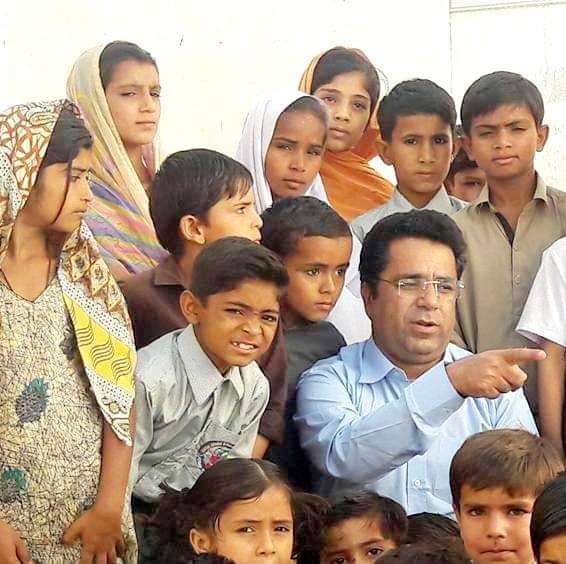
These institutions collectively serve over 2,500 students annually, all of whom receive free education, books, and uniforms.
-
The schools are designed to match the quality of private institutions, ensuring equity in education for children from low-income families.
-
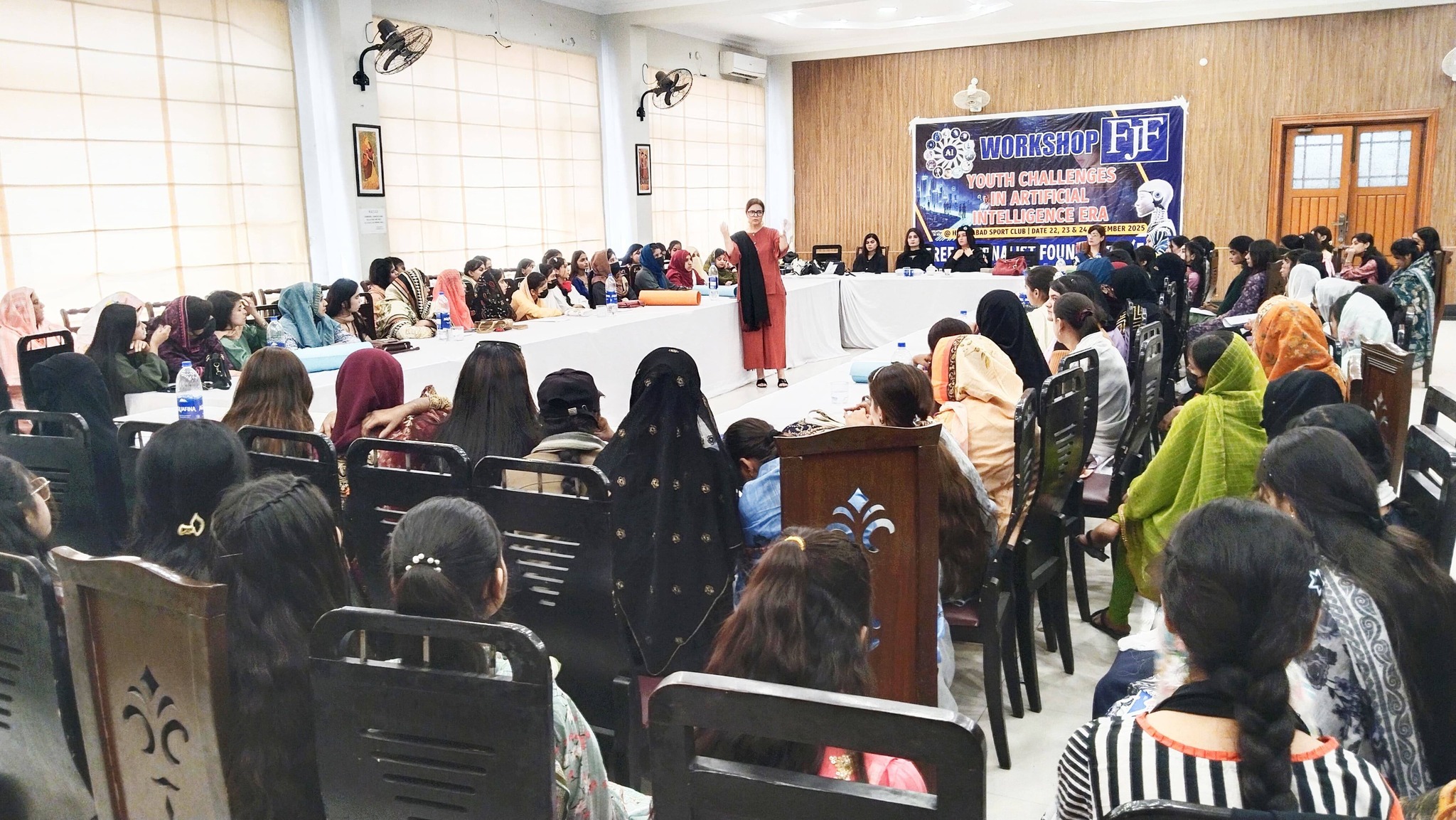
The organization has launched initiatives such as the FJF Role Model Awards, Teacher Appreciation Ceremonies, and Youth Leadership Forums, all aimed at celebrating changemakers, motivating educators, and empowering youth.
Through these achievements, FJF has established itself as not merely an NGO but as a community-driven movement for education and empowerment in Sindh.
Philosophy & Legacy
Mr. Chandio’s philosophy is deeply rooted in the belief that education is a fundamental right, not a privilege. His leadership at FJF embodies this conviction, ensuring that children from disadvantaged backgrounds are not left behind in the pursuit of knowledge. He continues to advocate for literacy, equality, and civic responsibility, inspiring both his colleagues in the press and communities across Sindh.
His influence now extends beyond journalism, as he is widely regarded as both a media leader and a social reformer. By merging his professional expertise with a humanitarian mission, he has set an example of how journalism can transcend reporting to become a vehicle for social transformation.
“Education is not charity—it’s a right. If we fail to deliver it to every child, we fail as a society.”
— Mr. Abdul Rauf Chandio